Marathi Wedding Invitation Card Designs
Marathi weddings pair grace with colour: paithani borders, mundavalya, and the joy of the saptapadi. The card should hold both.
The celebration and the card
A Marathi wedding centres on the ceremony with its antarpat, saptapadi, and the exchange of garlands, often preceded by halad and sangeet style celebrations. The invitation usually covers the main ceremony and the reception, with the pre wedding events listed alongside.
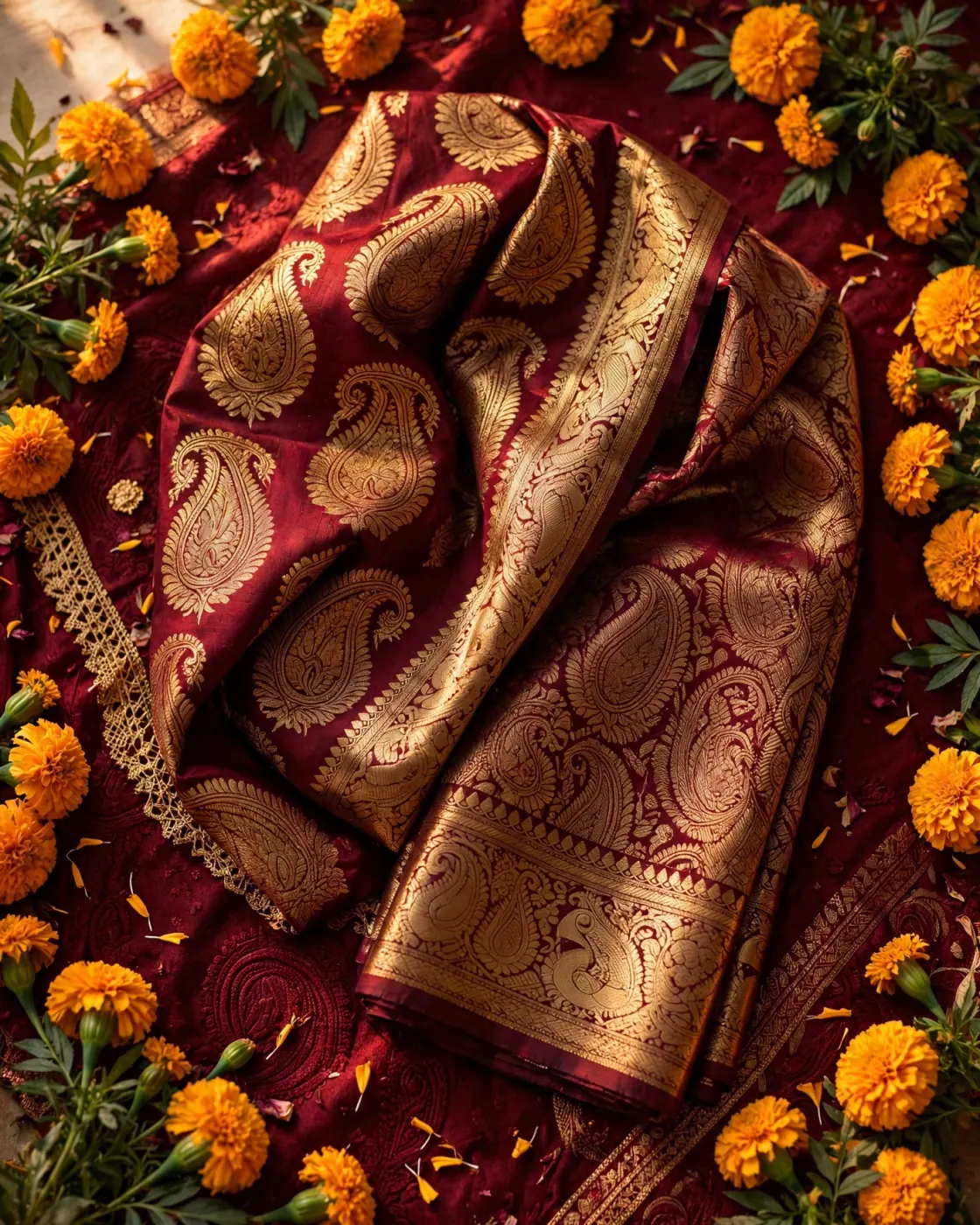
The design language draws on paithani silk: rich borders, peacock and paisley motifs, and colours like deep burgundy, green, and gold. A paithani inspired border on an ivory or burgundy card reads instantly as Marathi and elegant.
Designs to consider
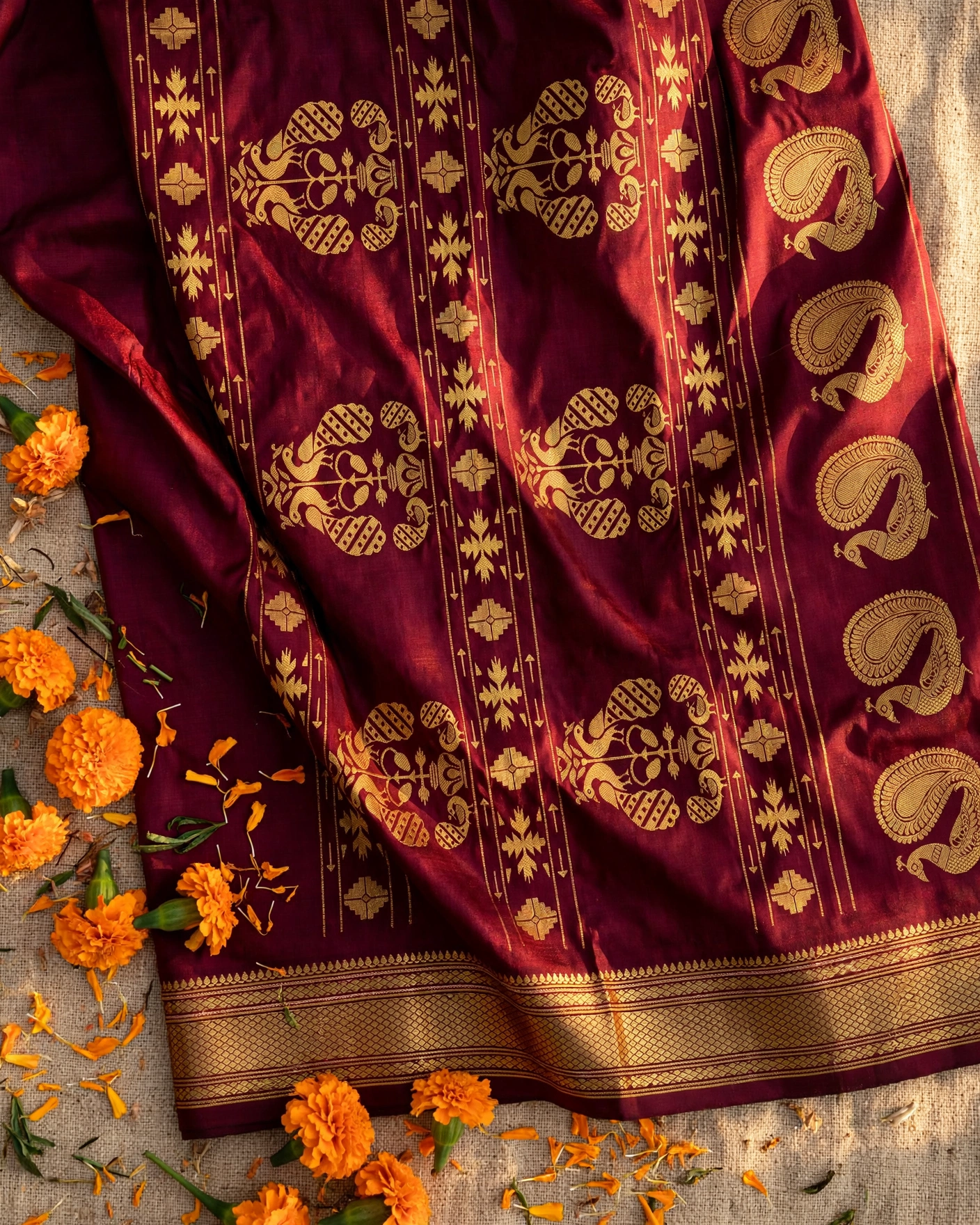
- A classic card with a paithani style border.
- A deep burgundy and gold card for a formal feel.
- A bright card in green and gold for a festive mood.
- A digital card with each event on its own screen.
Wording examples
- Graceful: With the blessings of our elders, we invite you to the wedding of our children. Saptapadi and celebrations, details inside.
- Simple: Marathi wedding celebrations. Main ceremony and reception, with halad and sangeet. Details inside.
Style and colour
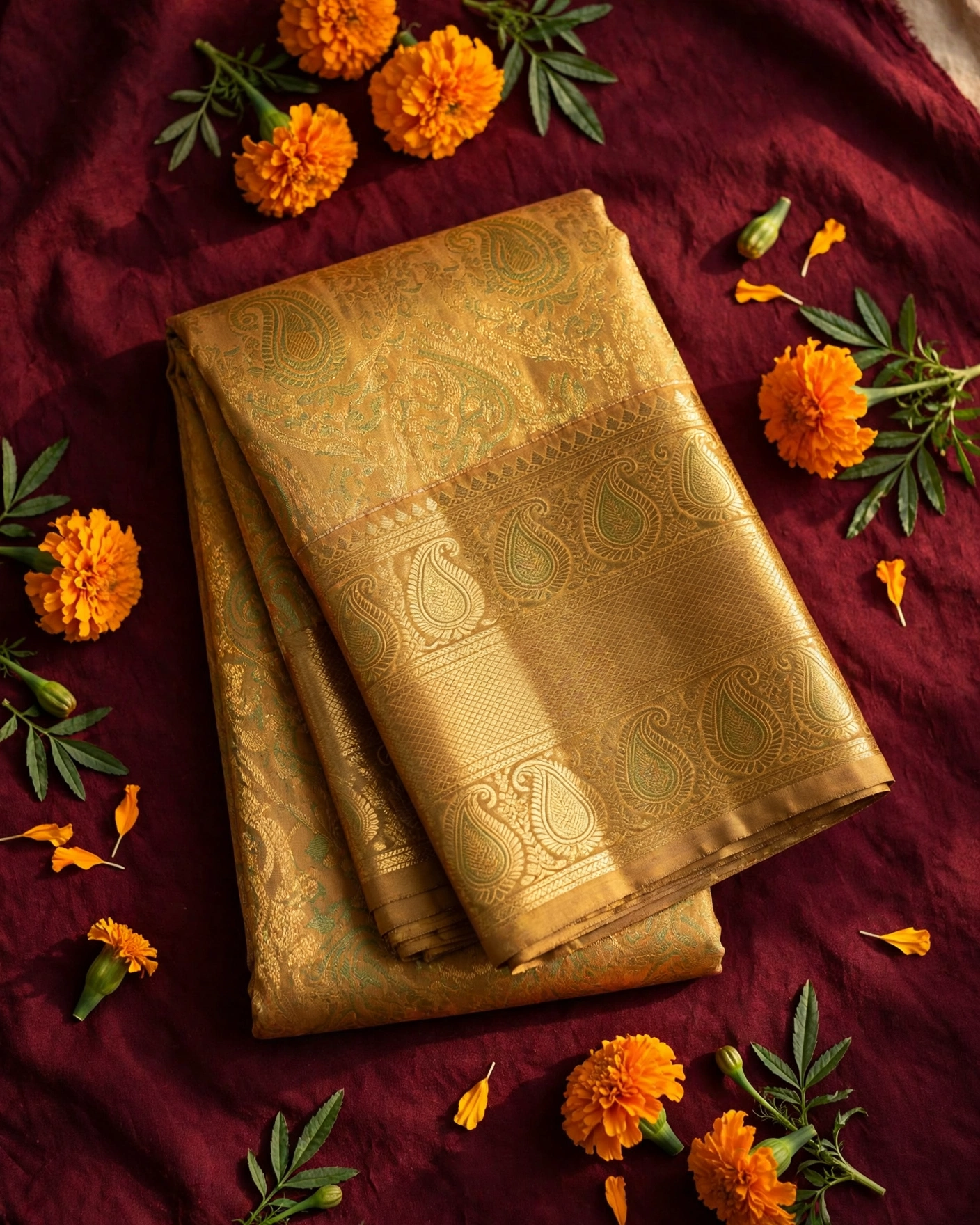
Marathi design suits paithani borders in gold on burgundy, green, or ivory. Paisley and peacock motifs work well, used as a border or a single focal motif rather than a crowded scene. Keep the couple's names prominent, and let the border do the cultural talking.
Paithani borders and paisley: a Marathi card carries its heritage in its frame.
Details to confirm before you send
- Both families' names spelt the way they sign them
- The main ceremony date, time, and venue
- When and where the reception begins, with a map pin
- A contact number for guests
Six more Marathi looks
Paithani peacock
A Paithani silk peacock in green and magenta along the border, the most loved Maharashtrian motif.
Mundavalya strings
The pearl strings worn across the couple's foreheads, drawn as a fine frame for the names.
Nauvari silhouette
A simple outline of a bride in a nine-yard saree, elegant and regional without being busy.
Toran of mango leaves
A green mango-leaf toran across the top, as hung over every Marathi home's door on the wedding day.
Ganpati first
A small Ganpati at the top, with "Shree Ganeshaya Namah" in Devanagari, the customary opening.
Antarpat cloth
A white antarpat with a swastik held between two hands, a reference to the moment the cloth drops.
Sending it in four steps
- List the sakhar puda, halad, wedding and reception, with times for each.
- Put the muhurta clearly, since Marathi weddings often start in the late morning.
- Write in Marathi with English below for friends outside Maharashtra.
- Send the card to elders first, then share the link with the wider circle.
Marathi weddings are known for keeping time, so guests take the muhurta seriously. Putting the akshata time on its own line ensures everyone is there to shower the couple with rice at the right moment.
Wording in Marathi and English
A Marathi card often begins "Aamchya kanyecha shubh vivah" and continues with the parents' invitation, the muhurta and the address. Friends from other states appreciate an English line beneath: "We would be honoured by your presence at the wedding of our daughter." Keep both versions short so the card does not become a page of text.
Many Pune and Mumbai families also mention the reception's dress code and whether a pangat lunch follows the ceremony, which helps out-of-town guests plan their day. Including a map pin for the hall, and a contact number for someone on each side, removes most of the calls that arrive on the wedding morning.
Keep the Paithani or mundavalya motif small and let the names lead, because a busy border on a phone screen quickly overwhelms the details guests actually need.
For a Konkan or Kolhapur family, a small coconut-palm or temple-bell motif ties the card to home without adding clutter, and relatives notice the gesture straight away.
Send a Marathi wedding invitation guests remember
Paithani colours and the mundavalya tradition suit a painted Marathi invitation you can preview free.
Every MyIndiAura design is hand painted and personalised with your own names, dates and venues. A Cinematic Invite is ₹499, an Invite App with RSVP and maps is ₹399, and an Invitation Suite PDF is ₹99, with a free preview before you pay.
- Kesar Swagat (Cinematic Invite, ₹499): saffron and gold in a palace courtyard, with falling rose petals.
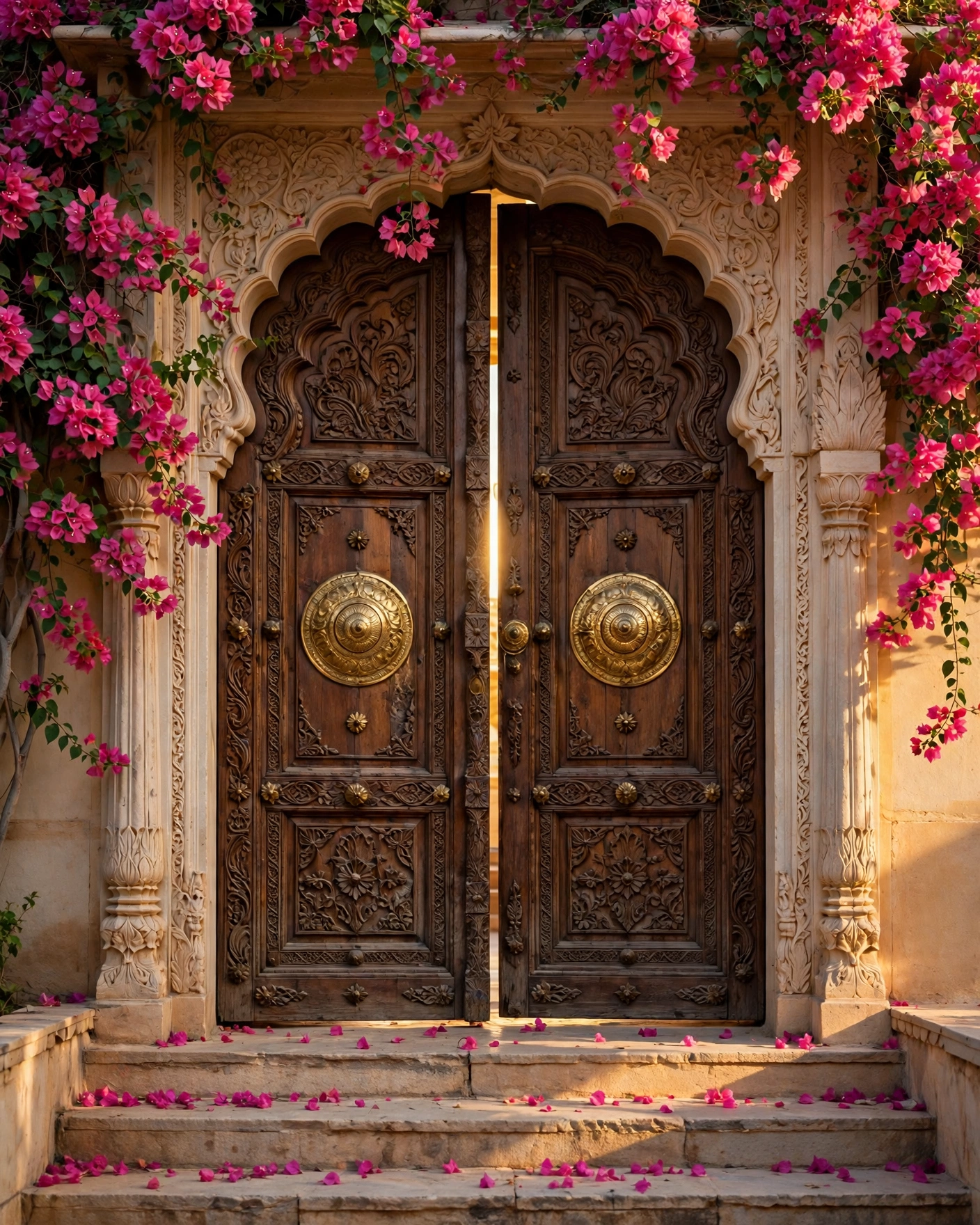
- Mandap Yatra (Cinematic Invite, ₹499): push open the haveli gates and walk, room by room, to the mandap.
- Laal Jora (Invite App, ₹399): classic bridal red and gold, with kalash and mango leaf toran.
Preview a design free with your own names, and pay only when it is ready to send.
Frequently asked questions
What is written at the top of a Marathi card?
Usually "Shree Ganeshaya Namah" or a short shloka, followed by the families' invitation in Marathi.
Which colours suit a Marathi wedding card?
Green, magenta and gold from the Paithani saree, or yellow and red for a traditional look.
What events go on the card?
The sakhar puda or engagement, the halad, the wedding with the muhurta, and the reception.
Should the card be bilingual?
Marathi first, with English below, is the most common and suits every guest.
Related reading
Make it real
Turn your celebration idea into an invitation
Preview a MyIndiAura invitation with your own names, functions and wording. Choose the format that fits your celebration, then share one clear link with your guests.
Explore invitation designs
Choose a design and preview it free with your own names.
Found this useful? Share it with someone planning a celebration.
Share